
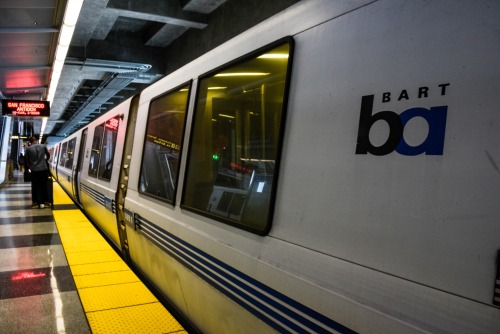
The San Francisco Bay Area Rapid Transit’s (BART) Board of Directors adopted a balanced budget for Fiscal Year 2027 that included $18 million in cuts and reduced staffing levels.
The $1.2 billion operating and $828 million capital budget covers July 1, 2026 through June 30, 2027, a period when pandemic emergency funding runs out, officials said. The district faces a structural deficit of $375 million, and regional transit funding measures that voters will decide on in November’s election. The board planned for two financial scenarios – one where the new revenue becomes available and the other where no new funds are provided in FY 27. For the latter, the board has initially approved an Alternative Service Plan that details service cuts, fare increases, and layoffs to close the $375 million deficit.
“This is a leaner budget with less spending and a smaller headcount,” BART Board President Melissa Hernandez said. “The board challenged staff to find efficiencies and reduce costs in a way that would not be experienced by the riders and would not negatively impact the improvements we have made resulting in the highest reliability and satisfaction rates in years.”
The budget adopted recently assumes the transit funding measure is approved and will provide $74 million in new revenue to BART in FY27. Even with new sales tax proceeds, BART needed to solve for an additional $302 million in order to not impact riders or cut services. The budget makes $18.2 million in ongoing cuts with $7.3 million in ongoing department reductions and efficiencies and $11 million savings from labor costs through the elimination of 63 full-time positions. The FY27 budget also borrows $88.5 million to prevent service cuts and to bridge the funding gap until new revenues become available.
The agency’s Capital budget will invest in a new Communications Based Train Control system, traction power upgrades, elevator modernization, escalator replacement, and a highly prioritized computer network modernization project intended to prevent major service disruptions caused by outdated equipment. BART will also replace key track equipment near Fremont and Oakland, and complete construction of a modernized Operations Control Center.
The agency’s budget does not include a fare increase during FY27 and maintains discounts for seniors, youth, low-income riders and riders with disabilities. The budget also assumes $2.5 million in additional revenue from parking increases and more people parking as ridership grows.
If the funding measure is successful, BART will operate on current service levels with a schedule change on Aug. 10 to make improvements enhancing reliability and reduced wait times.