
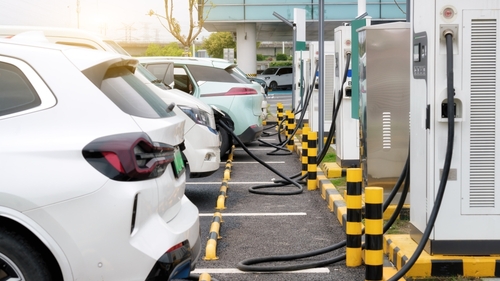
Revised guidance surrounding the National Electric Vehicle Infrastructure (NEVI) Formula Program will allow states to build electric vehicle charging stations quickly and efficiently, U.S. Transportation Secretary Sean Duffy said.
The new guidance from the U.S. Department of Transportation would streamline applications, provide states with more flexibility and slash red tape, Duffy said. The Interim Final Guidance will be effective immediately, he said while the Federal Highway Administration seeks comments on what other changes may also be appropriate.
“If Congress is requiring the federal government to support charging stations, let’s cut the waste and do it right,” Duffy said. “Our revised NEVI guidance slashes red tape and makes it easier for states to efficiently build out this infrastructure. While I don’t agree with subsidizing green energy, we will respect Congress’ will and make sure this program uses federal resources efficiently.”
Duffy said his office and the FHWA launched a review of NEVI program guidance earlier this year to make the program more efficient. At the time of the review, he said, 84 percent of the NEVI Formula program funds were unobligated. The new guidance minimizes the content in state plans to adhere to new federal requirements, provides states with more flexibility to determine appropriate distances between stations along fuel corridors and minimizes requirements for states to consider electric grid integration and renewable energy. The new guidance also eliminates requirements for states to address consumer protections, emergency evacuation plans, environmental siting, resilience and terrain considerations.
Officials said guidance eliminated language such as “Plans should be developed and updated through engagement with rural, underserved, and disadvantaged communities to ensure that diverse views are heard and considered throughout the planning process, and to ensure that the deployment, installation, operation, and use of EV charging infrastructure achieves equitable and fair distribution of benefits and services,” and “The Plan should also address emergency and evacuation needs, snow removal and seasonal needs, and ways for EV charging to support those needs. The Plan should also describe strategies for resilience for operation during emergencies and extreme weather.”
Under the Interim Final Guidance, states can submit their EV Infrastructure Deployment Plans within 30 days.