
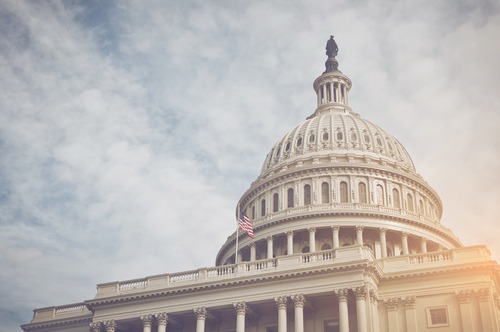
Legislation to address issues that arose after the investigation of the 2025 midair collision between an American Airlines flight and an Army Black Hawk helicopter over the Potomac River passed the U.S. House of Representatives this week.
The legislation, the Airspace Location and Enhanced Risk Transparency (ALERT) Act, stemmed from the conclusion of the National Transportation Safety Board’s investigation into the accident. The legislation includes a package of improvements responding to the safety issues raised by the investigation, and addresses all 50 of the NTSB’s recommendations.
“The tragic crash that occurred over the Potomac River and most other aviation incidents are rarely the result of a single issue or failure. They are the result of multiple contributing and complex factors, which is why it was essential that we understood all the facts before legislating,” House Transportation and Infrastructure Committee chair U.S. Rep. Sam Graves (R-MO), and the legislation’s sponsor, said.
The legislation was also sponsored by U.S. Reps. Rick Larsen (D-WA), the T&I Committee Ranking Member; Mike Rogers (R-AL) Armed Services Committee Chair; and Adam Smith (D-WA), Armed Services Committee Ranking Member. The bill was approved by a bipartisan vote of 396 to 10.
“My deepest condolences remain with the families of the 67 lives lost in the DCA mid-air tragedy,” Larsen said. “The bipartisan ALERT Act is the result of productive, good-faith collaboration and incorporates feedback from the NTSB and the aviation community to make it a truly comprehensive safety bill. Today’s passage of the ALERT Act is the next step in delivering on Congress’ safety commitment to the flying public and acting on the NTSB’s 50 safety recommendations.”
The legislation requires virtually all aircraft that are required to have ADS-B (Automatic Dependent Surveillance–Broadcast) Out have ADS-B In technology by Dec. 31, 2031; updates helicopter route safety and separation requirements; requires updates to air traffic control training, processes, and procedures to promote safety; and investigates the safety culture and data sharing that contributed to the collision; as well as tackles mismanagement within the FAA that contributed to the collision. Legislation would also strengthen oversight of flight operations in congested airspace and enhances requirement and guidance for collision avoidance technology in military aircraft.
“With the passage of the ALERT Act, Congress is making meaningful policy to improve air safety and prevent tragic accidents like the one that occurred last year between an Army helicopter and a passenger jet. The ALERT Act is built on the NTSB’s year-long investigation and analysis of the crash, and it implements each of their recommendations. In many cases, this bill exceeds NTSB’s recommendations,” Rogers said. “Our commercial and passenger flights share the same skies as our military aircraft, and we have a responsibility to ensure they all operate safely and securely. By working closely with NTSB and the Pentagon, we ultimately produced legislation that improves aviation safety without undermining our national security.”